Kitchens
Testing concepts against the reality of the product.
The Thoughts For Food Kitchen
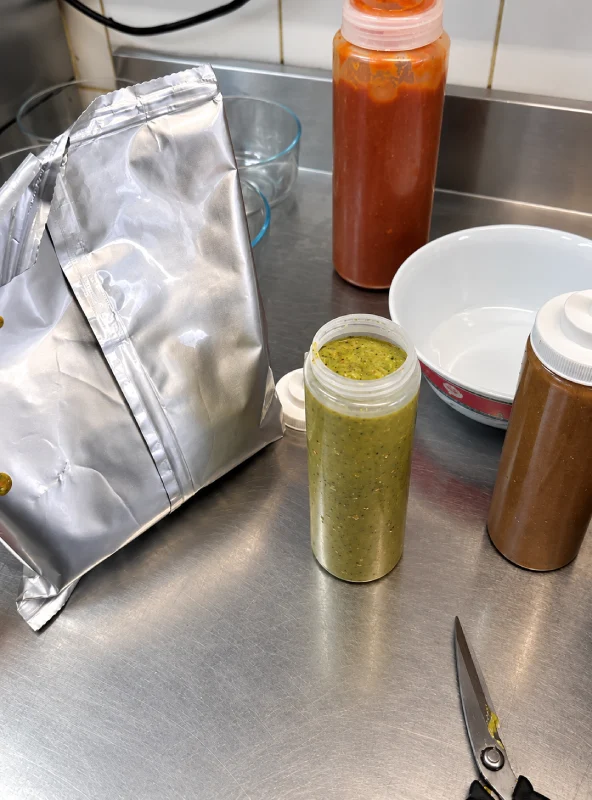
Prototypes in development
01
Development & prototyping
The Thoughts For Food Kitchen
Developing and prototyping products early in the process makes it possible to quickly identify which directions to pursue, refine or abandon.
Thoughts For Food develops and prototypes concepts in the kitchen to:
- Test the consistency of innovation platforms and quickly identify ideas that don’t hold up
- Experiment with ingredient pairings and flavor and texture combinations
- Explore product formats and culinary usage
- Develop, refine and prioritize ideas generated during ideation
- Turn ideas into concrete product architectures
The directions developed and prioritized through this process are then formalized to guide and facilitate the work of marketing and R&D teams.
Kitchen Lab
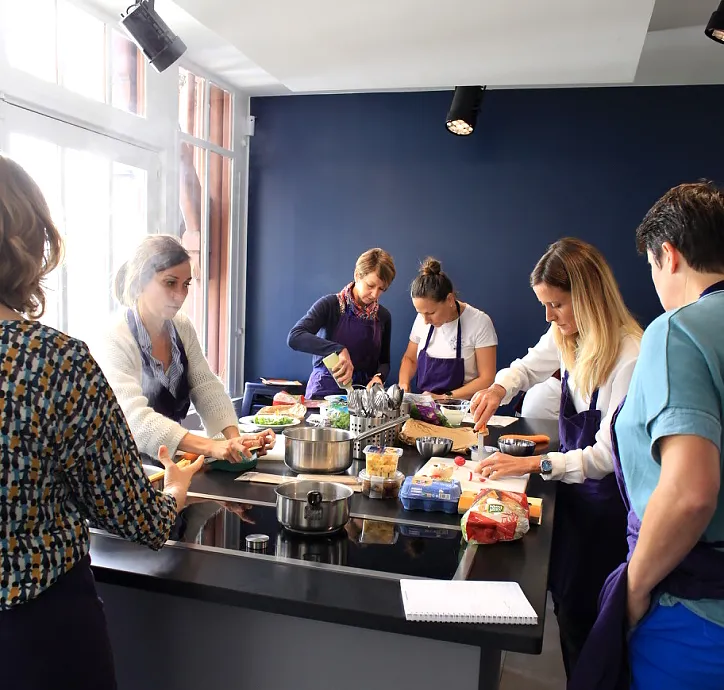
Group experimentation session
02
Experimentation & testing
The Consumer Kitchen Lab
Having consumers experiment with products reveals what they actually do with them, not just what they say.
This approach makes it possible to:
- Observe behaviors and usage in context
- Assess product relevance and consumer adoption
- Identify spontaneous product or recipe adjustments
- Uncover product opportunities and barriers
- Refine, select or redirect development directions
In professional kitchens
Real-world product testing
With consumers
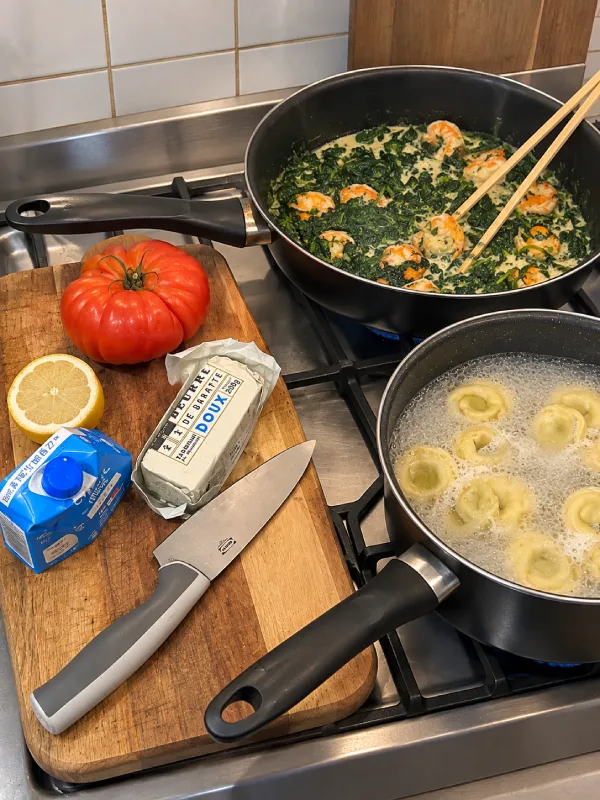
In-home prototype testing
03
Real-world contexts & usage
In-Home Kitchens
With Consumers & Food Professionals
A product also needs to prove itself under real-world conditions of use.
Once prototypes developed by R&D teams are sufficiently advanced, they are given to consumers or food professionals to use in their own kitchens, following a protocol defined in advance.
Over one to two weeks, participants cook, experiment and document their experiences through photos and videos, sharing their preparations, tastings and consumption contexts with us.
In-home testing also allows participants to share the products with family, friends, colleagues or customers, gathering a broader and more diverse range of feedback on the products being tested.
This approach makes it possible to observe how products are adopted and adapted, while also assessing their real-world performance: taste, texture, format and behavior during preparation or cooking.
The insights are then translated into recommendations that enable R&D teams to refine the prototypes.